

General Forum, 2023-2027 Term
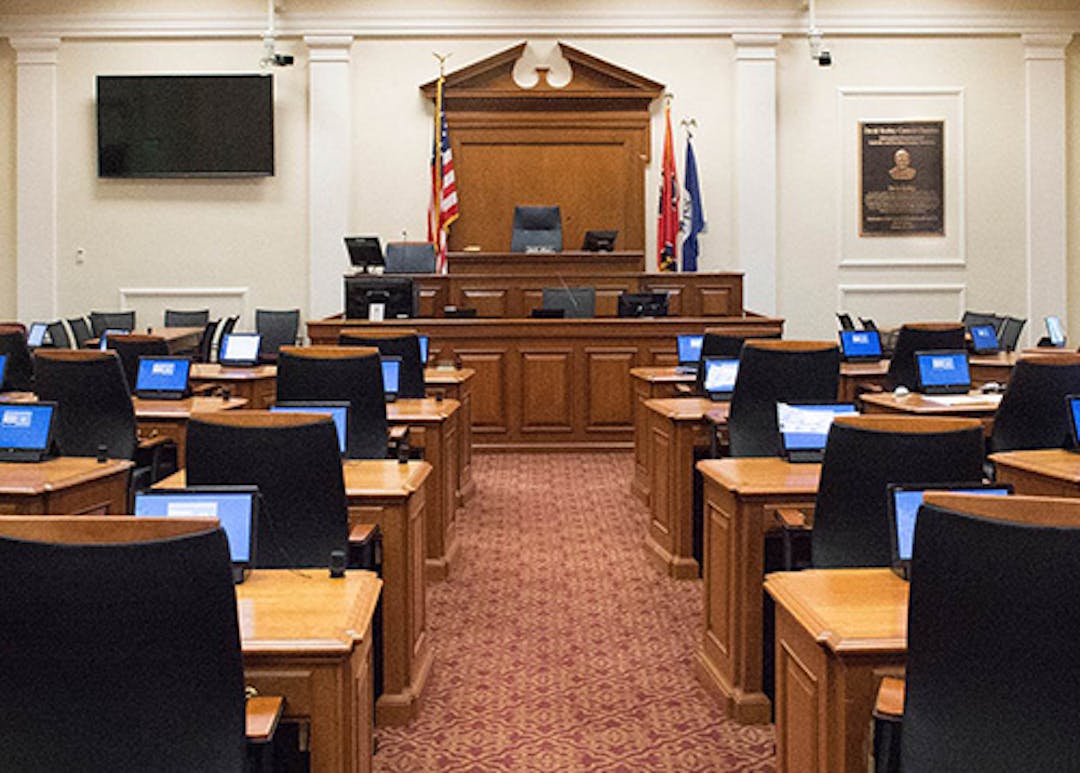
This is a forum for discussion by Councilmembers of topics relevant to the 2023-2027 Council term.
Only Councilmembers may participate in posting to this internet forum, pursuant to state law.
Please scroll down to view all discussion topics.
This is a forum for discussion by Councilmembers of topics relevant to the 2023-2027 Council term.
Only Councilmembers may participate in posting to this internet forum, pursuant to state law.
Please scroll down to view all discussion topics.
-
You need to be signed in to add your comment.
Sign InThis discussion topic was requested by Council Member Jennifer Gamble regarding the Health and Educational Facilities Board nominee Dr. Ouida Davis.
From CM Gamble:
Dear Colleagues,
I’m writing to ask for your support of Dr. Ouida Davis for the Health and Educational Facilities Board. Dr. Davis has over 20 years of experience in social services, specializing in public policy, strategic planning, and program coordination. Prior to retiring from Metro Social Services in April of this year, she coordinated services for individuals facing housing instability, economic uncertainty, and health concerns. She has a doctorate in education, leadership and professional practice and has coordinated programming for adults, seniors, and immigrant populations.
During Dr. Davis’s interview on Aug 18, with the Metro Council Rules, Confirmations, and Public Elections Committee, she talked about how she would bring her experience working with vulnerable populations to the HEFB. She gave an example of how important it is to consider all aspects of family support services when making decisions about how the city finances capital projects, facilities, and housing for qualifying health and educational institutions.
I believe that Dr. Davis will bring a fresh perspective to the Health and Educational Facilities Board, and I ask for your support of her nomination.
This discussion topic was requested by Council Member Jennifer Gamble regarding the Health and Educational Facilities Board nominee Dr. Ouida Davis.
From CM Gamble:
Dear Colleagues,
I’m writing to ask for your support of Dr. Ouida Davis for the Health and Educational Facilities Board. Dr. Davis has over 20 years of experience in social services, specializing in public policy, strategic planning, and program coordination. Prior to retiring from Metro Social Services in April of this year, she coordinated services for individuals facing housing instability, economic uncertainty, and health concerns. She has a doctorate in education, leadership and professional practice and has coordinated programming for adults, seniors, and immigrant populations.
During Dr. Davis’s interview on Aug 18, with the Metro Council Rules, Confirmations, and Public Elections Committee, she talked about how she would bring her experience working with vulnerable populations to the HEFB. She gave an example of how important it is to consider all aspects of family support services when making decisions about how the city finances capital projects, facilities, and housing for qualifying health and educational institutions.
I believe that Dr. Davis will bring a fresh perspective to the Health and Educational Facilities Board, and I ask for your support of her nomination.
Go to discussionThank you for your contribution!
Help us reach out to more people in the community
Share this with family and friends
No thanks -
You need to be signed in to add your comment.
Sign InThis discussion topic was requested by Council Member Burkley Allen regarding the Health and Educational Facilities Board nominee Matt Wiltshire.
From CM Allen:
Dear Colleagues,
I am writing to ask for your support for Matt Wiltshire for Health and Education Facilities Board, Matt has already served on this board, fulfilling an unexpired term. He understands the mission of the HEFB as it is spelled out in the Metro Code: to issue revenue bonds and loan the proceeds to finance the acquisition, construction, development, rehabilitation, and improvement of health, educational, and multifamily housing facilities. The types of eligible projects and borrowers are determined by State statute and include hospitals, universities, non-profit schools, and multifamily housing developers.
Matt’s work experience with the Metro Development and Housing Agency (MDHA) and now with Pathway Lending has given him first-hand experience at understanding the complex financing involved in affordable housing finance, and the life changing outcomes from having good housing, healthcare, and educational opportunities. During his campaign for Mayor, Matt focused heavily on education in Nashville and demonstrated his intimate knowledge of our local educational options and the importance of providing every student with a great education.
Matt is a dedicated servant for public good, and I would appreciate your consideration for this position.
This discussion topic was requested by Council Member Burkley Allen regarding the Health and Educational Facilities Board nominee Matt Wiltshire.
From CM Allen:
Dear Colleagues,
I am writing to ask for your support for Matt Wiltshire for Health and Education Facilities Board, Matt has already served on this board, fulfilling an unexpired term. He understands the mission of the HEFB as it is spelled out in the Metro Code: to issue revenue bonds and loan the proceeds to finance the acquisition, construction, development, rehabilitation, and improvement of health, educational, and multifamily housing facilities. The types of eligible projects and borrowers are determined by State statute and include hospitals, universities, non-profit schools, and multifamily housing developers.
Matt’s work experience with the Metro Development and Housing Agency (MDHA) and now with Pathway Lending has given him first-hand experience at understanding the complex financing involved in affordable housing finance, and the life changing outcomes from having good housing, healthcare, and educational opportunities. During his campaign for Mayor, Matt focused heavily on education in Nashville and demonstrated his intimate knowledge of our local educational options and the importance of providing every student with a great education.
Matt is a dedicated servant for public good, and I would appreciate your consideration for this position.
Thank you for your contribution!
Help us reach out to more people in the community
Share this with family and friends
No thanks -
BL2026-1526
9 days agoYou need to be signed in to add your comment.
Sign InThe discussion topic was requested by Council Member Tasha Ellis, relative to Ordinance No. BL2026-1526.
BL2026-1526 was deferred two meetings out of Transportation and Infrastructure this evening. Four members had outstanding questions.
For those who have not read it: BL2026-1526 directs NDOT to build a standardized tool for tracking the cumulative transportation impacts of developments and rezonings across the county, rather than assessing each application in isolation. It directs NDOT to coordinate with Planning and other agencies on when an area transportation infrastructure analysis is warranted, and requests that improvements identified through that analysis be considered in future Capital Improvement Budgets. Section 4 leaves the method and thresholds to departmental judgment.
I'd encourage everyone to go back and watch the Transportation and Infrastructure Committee meeting. The discussion is worth hearing in full, and I would rather people form their own view from the recording than from a summary.
Here is why this tool matters. In March 2024, Council passed RS2024-288 asking four questions about housing and infrastructure. Two of them were about whether our infrastructure can carry the growth we were about to allow. We adopted the zoning changes that came out of the first two questions. We are still waiting on full answers to the other two.
Councilmember Druffel has been working with NDOT on this tool for ten months. It does one thing we currently cannot do: measure the cumulative transportation effect of development instead of reviewing each project as if the last one never happened.
There was discussion about broadening the tool to cover stormwater. The bill as written already directs NDOT to coordinate with Planning and other relevant agencies, and it deliberately leaves method and threshold to departmental expertise. Nothing needs to be added for stormwater work to happen.
Quick noteworthy side bar: The Planning Committee chair stated that the outstanding infrastructure study will be complete in the next few weeks. That is the first timeline this Council has been given.
I'd encourage colleagues to read the bill itself ahead of tomorrow night so we can discuss it knowledgeably, including the concerns I've raised here. It is short.
More importantly, do not wait on this. If you have a technical question about what the tool can and cannot do, send it to NDOT through the committee chair so we get an answer on the record. If you think the bill needs an amendment, contact the Council Office now rather than in the week it returns, since amendments have to be filed well ahead of the meeting to be considered. A two-meeting deferral is only useful if we use it. I would rather we arrive at that meeting having established either that no amendments are needed or that we have the right ones drafted and circulated.
The discussion topic was requested by Council Member Tasha Ellis, relative to Ordinance No. BL2026-1526.
BL2026-1526 was deferred two meetings out of Transportation and Infrastructure this evening. Four members had outstanding questions.
For those who have not read it: BL2026-1526 directs NDOT to build a standardized tool for tracking the cumulative transportation impacts of developments and rezonings across the county, rather than assessing each application in isolation. It directs NDOT to coordinate with Planning and other agencies on when an area transportation infrastructure analysis is warranted, and requests that improvements identified through that analysis be considered in future Capital Improvement Budgets. Section 4 leaves the method and thresholds to departmental judgment.
I'd encourage everyone to go back and watch the Transportation and Infrastructure Committee meeting. The discussion is worth hearing in full, and I would rather people form their own view from the recording than from a summary.
Here is why this tool matters. In March 2024, Council passed RS2024-288 asking four questions about housing and infrastructure. Two of them were about whether our infrastructure can carry the growth we were about to allow. We adopted the zoning changes that came out of the first two questions. We are still waiting on full answers to the other two.
Councilmember Druffel has been working with NDOT on this tool for ten months. It does one thing we currently cannot do: measure the cumulative transportation effect of development instead of reviewing each project as if the last one never happened.
There was discussion about broadening the tool to cover stormwater. The bill as written already directs NDOT to coordinate with Planning and other relevant agencies, and it deliberately leaves method and threshold to departmental expertise. Nothing needs to be added for stormwater work to happen.
Quick noteworthy side bar: The Planning Committee chair stated that the outstanding infrastructure study will be complete in the next few weeks. That is the first timeline this Council has been given.
I'd encourage colleagues to read the bill itself ahead of tomorrow night so we can discuss it knowledgeably, including the concerns I've raised here. It is short.
More importantly, do not wait on this. If you have a technical question about what the tool can and cannot do, send it to NDOT through the committee chair so we get an answer on the record. If you think the bill needs an amendment, contact the Council Office now rather than in the week it returns, since amendments have to be filed well ahead of the meeting to be considered. A two-meeting deferral is only useful if we use it. I would rather we arrive at that meeting having established either that no amendments are needed or that we have the right ones drafted and circulated.
Thank you for your contribution!
Help us reach out to more people in the community
Share this with family and friends
No thanks -
You need to be signed in to add your comment.
Sign InThis discussion topic was requested by Council Member Mike Cortese, relative to Resolution No. RS2026-2189.
Colleagues,
I will not be able to attend the Transportation & Infrastructure Committee meeting on Monday. I only have one resolution (RS2026-2189) up for review, and I am comfortable with it running on consent. I did, however, want to provide some context in the event the Chair or any committee members have questions.
I recently attended a graduation for high school students entering our MC3 pre-apprenticeship program and came away with a concern that I believe deserves our attention.
As my colleagues know, MC3 creates a strong pathway into well-paying careers in the skilled trades. But many of these young graduates are expected to provide their own transportation to job sites, which can change from day to day and are often difficult to reach without a vehicle. For students coming from families with limited resources, that can become a barrier to opportunity before their careers even begin.
I approached WeGo to see what options might be available to help close that gap. Their team suggested adding MC3 participants to the Journey Pass Program and has been incredibly receptive to the idea. They are also open to exploring adjustments to the first-mile/last-mile service provided through Uber so it can better align with job sites throughout Davidson County. The WeGo team shares our goal of making sure transportation is never the reason one of these young people misses out on a life-changing opportunity.
We have also begun discussions with the Choose How You Move team in the Mayor’s Office, and they have been very receptive as well.
This resolution is intended to put the Council’s support for MC3, and for expanding the Journey Pass Program to help these students get to work, clearly on the record. We have invested in creating a pathway to good-paying careers. We should do everything reasonably within our power to make sure transportation is not the barrier that keeps a young person from walking through that door.
This discussion topic was requested by Council Member Mike Cortese, relative to Resolution No. RS2026-2189.
Colleagues,
I will not be able to attend the Transportation & Infrastructure Committee meeting on Monday. I only have one resolution (RS2026-2189) up for review, and I am comfortable with it running on consent. I did, however, want to provide some context in the event the Chair or any committee members have questions.
I recently attended a graduation for high school students entering our MC3 pre-apprenticeship program and came away with a concern that I believe deserves our attention.
As my colleagues know, MC3 creates a strong pathway into well-paying careers in the skilled trades. But many of these young graduates are expected to provide their own transportation to job sites, which can change from day to day and are often difficult to reach without a vehicle. For students coming from families with limited resources, that can become a barrier to opportunity before their careers even begin.
I approached WeGo to see what options might be available to help close that gap. Their team suggested adding MC3 participants to the Journey Pass Program and has been incredibly receptive to the idea. They are also open to exploring adjustments to the first-mile/last-mile service provided through Uber so it can better align with job sites throughout Davidson County. The WeGo team shares our goal of making sure transportation is never the reason one of these young people misses out on a life-changing opportunity.
We have also begun discussions with the Choose How You Move team in the Mayor’s Office, and they have been very receptive as well.
This resolution is intended to put the Council’s support for MC3, and for expanding the Journey Pass Program to help these students get to work, clearly on the record. We have invested in creating a pathway to good-paying careers. We should do everything reasonably within our power to make sure transportation is not the barrier that keeps a young person from walking through that door.
Thank you for your contribution!
Help us reach out to more people in the community
Share this with family and friends
No thanks -
Municipal Auditorium Commission Nominee
24 days agoYou need to be signed in to add your comment.
Sign InThis discussion topic was requested by Council Member Sheri Weiner, pertaining to the Municipal Auditorium Commission Election set for Tuesday.
I am writing to ask for your support of Ron Deal, Jr. for appointment to the Municipal Auditorium Commission.
Ron’s background is exceptionally well aligned with the work of the Commission. His career brings together many of the disciplines directly relevant to the stewardship and operation of a major public venue: architecture, construction and facility management, budgeting, venue operations, public safety, law and urban planning.
He is a registered architect and currently serves as Architect and Design Manager for the Tennessee Department of Military, overseeing capital projects, budgets, construction, code compliance and long-term facility needs.
Most directly relevant, Ron previously served as Senior Director of Facility Operations for Nashville SC, where he was responsible for facility management, operations and budgeting at the 30,000-seat GEODIS Park, including its use for soccer, concerts and private events. He also coordinated construction and commissioning and helped identify operational improvements and cost savings.
His experience also includes construction and facility management for the Catholic Diocese of Nashville, construction law, urban planning, and extensive sports and special-event safety and emergency management training.
Ron understands how a public venue is designed, built, operated, maintained, budgeted and kept safe. I believe that combination of experience would make him a tremendous asset to the Municipal Auditorium Commission.
I hope you will join me in supporting his appointment.
Thank you for your consideration.
Sheri
This discussion topic was requested by Council Member Sheri Weiner, pertaining to the Municipal Auditorium Commission Election set for Tuesday.
I am writing to ask for your support of Ron Deal, Jr. for appointment to the Municipal Auditorium Commission.
Ron’s background is exceptionally well aligned with the work of the Commission. His career brings together many of the disciplines directly relevant to the stewardship and operation of a major public venue: architecture, construction and facility management, budgeting, venue operations, public safety, law and urban planning.
He is a registered architect and currently serves as Architect and Design Manager for the Tennessee Department of Military, overseeing capital projects, budgets, construction, code compliance and long-term facility needs.
Most directly relevant, Ron previously served as Senior Director of Facility Operations for Nashville SC, where he was responsible for facility management, operations and budgeting at the 30,000-seat GEODIS Park, including its use for soccer, concerts and private events. He also coordinated construction and commissioning and helped identify operational improvements and cost savings.
His experience also includes construction and facility management for the Catholic Diocese of Nashville, construction law, urban planning, and extensive sports and special-event safety and emergency management training.
Ron understands how a public venue is designed, built, operated, maintained, budgeted and kept safe. I believe that combination of experience would make him a tremendous asset to the Municipal Auditorium Commission.
I hope you will join me in supporting his appointment.
Thank you for your consideration.
Sheri
Thank you for your contribution!
Help us reach out to more people in the community
Share this with family and friends
No thanks -
Nashville's Tourist Development Zones
26 days agoYou need to be signed in to add your comment.
Sign InThis discussion topic was requested by Council Member Courtney Johnston, relative to tourist development zones as described in RS2026-2135 and BL2026-1493. The topic links to a multi-page article that explains TDZs and the related legislation in further detail.
Major financial proposals can involve dozens of legal documents, bond agreements and technical terms. This article is intended to explain the proposal in plain English — not to persuade, but to explain exactly what the TDZ is and what changes Metro is discussing enacting given the State’s authority to do so.
This discussion topic was requested by Council Member Courtney Johnston, relative to tourist development zones as described in RS2026-2135 and BL2026-1493. The topic links to a multi-page article that explains TDZs and the related legislation in further detail.
Major financial proposals can involve dozens of legal documents, bond agreements and technical terms. This article is intended to explain the proposal in plain English — not to persuade, but to explain exactly what the TDZ is and what changes Metro is discussing enacting given the State’s authority to do so.
Thank you for your contribution!
Help us reach out to more people in the community
Share this with family and friends
No thanks -
BL2026-1520 on 1st reading
27 days agoYou need to be signed in to add your comment.
Sign InThis discussion topic was requested by Council Member Tasha Ellis, relative to BL2026-1520, legislation relative to the definition of "boarding house" within the Metropolitan Zoning Code.
BL2026-1520 quietly strikes the clause "who are in need of shared lodging and personal services, supervision, or rehabilitative services" from Nashville's definition of "boarding house" (17.04.060). That clause is what tied the term to supportive/recovery housing. Removing it turns "boarding house" into a plain physical-use category: any temporary, shared-room accommodation, need or no need.
Before this reaches second reading, I'd like the sponsor and Planning staff to answer three questions publicly: (1) What prompted this specific deletion — a Fair Housing Act compliance concern, or a broader push to open up room-by-room rental uses? (2) Does this change anything in the Title 17.16 use table governing which zoning districts permit boarding houses, or does it only touch the definition? (3) Is this being coordinated with the pending changes to our unrelated-occupant cap?
I'm asking because co-living operators that convert single-family homes into 5-8 bedroom room-by-room rentals — PadSplit already operates in Nashville — depend on exactly this kind of definitional flexibility nationally. District 29 has already seen what concentrated investor ownership of single-family housing does to a neighborhood. I want to know whether this bill is unrelated cleanup or a first domino.
This discussion topic was requested by Council Member Tasha Ellis, relative to BL2026-1520, legislation relative to the definition of "boarding house" within the Metropolitan Zoning Code.
BL2026-1520 quietly strikes the clause "who are in need of shared lodging and personal services, supervision, or rehabilitative services" from Nashville's definition of "boarding house" (17.04.060). That clause is what tied the term to supportive/recovery housing. Removing it turns "boarding house" into a plain physical-use category: any temporary, shared-room accommodation, need or no need.
Before this reaches second reading, I'd like the sponsor and Planning staff to answer three questions publicly: (1) What prompted this specific deletion — a Fair Housing Act compliance concern, or a broader push to open up room-by-room rental uses? (2) Does this change anything in the Title 17.16 use table governing which zoning districts permit boarding houses, or does it only touch the definition? (3) Is this being coordinated with the pending changes to our unrelated-occupant cap?
I'm asking because co-living operators that convert single-family homes into 5-8 bedroom room-by-room rentals — PadSplit already operates in Nashville — depend on exactly this kind of definitional flexibility nationally. District 29 has already seen what concentrated investor ownership of single-family housing does to a neighborhood. I want to know whether this bill is unrelated cleanup or a first domino.
Thank you for your contribution!
Help us reach out to more people in the community
Share this with family and friends
No thanks -
Open Questions and Discussions re Takings Ordinance
about 2 months agoYou need to be signed in to add your comment.
Sign InThis discussion topic was requested by Council Member Quin Evans Segall relative to BL2026-1489, relative to authorizing Metro to acquire a parcel of property through negotiation and condemnation.Colleagues,Last night in the Budget Committee, I asked several questions of finance and legal re the takings ordinance. I am a little concerned that those answers were vague and very concerned that we’re exposed to potentially large sums of money. I’ve asked the following questions of legal and finance and will share answers when they are available. I would also ask that folks support a re-referral to committee on third reading so that we can address any open questions in committee (as opposed to on the floor during a regular meeting).- Can you please identify the specific funds in the CSP that will be used and what those funds were allocated for?
What are the specific needs (square footage, etc.) for which the CSP funds were allocated?
- I’ve been reviewing the MCC cases. This seems analogous to me because in both cases current use and possible future use are so drastically different in terms of FMV. Have we analyzed whether there are any vested rights with the new owners that would affect a fair market value finding?
- How did we determine the CSP funding numbers for these needs?
- If it turns out that there are vested rights that affect the fair market value, would Metro be able to dismiss the taking at any point during the litigation?
- If we started but didn’t finish a taking, are there any possible claims the property owner could bring against us?
This discussion topic was requested by Council Member Quin Evans Segall relative to BL2026-1489, relative to authorizing Metro to acquire a parcel of property through negotiation and condemnation.Colleagues,Last night in the Budget Committee, I asked several questions of finance and legal re the takings ordinance. I am a little concerned that those answers were vague and very concerned that we’re exposed to potentially large sums of money. I’ve asked the following questions of legal and finance and will share answers when they are available. I would also ask that folks support a re-referral to committee on third reading so that we can address any open questions in committee (as opposed to on the floor during a regular meeting).- Can you please identify the specific funds in the CSP that will be used and what those funds were allocated for?
What are the specific needs (square footage, etc.) for which the CSP funds were allocated?
- I’ve been reviewing the MCC cases. This seems analogous to me because in both cases current use and possible future use are so drastically different in terms of FMV. Have we analyzed whether there are any vested rights with the new owners that would affect a fair market value finding?
- How did we determine the CSP funding numbers for these needs?
- If it turns out that there are vested rights that affect the fair market value, would Metro be able to dismiss the taking at any point during the litigation?
- If we started but didn’t finish a taking, are there any possible claims the property owner could bring against us?
Thank you for your contribution!
Help us reach out to more people in the community
Share this with family and friends
No thanks -
BL2026-1430 and Amendment: Budget Book
about 2 months agoYou need to be signed in to add your comment.
Sign InThis discussion topic was request by Council Member Russ Bradford, relative to BL2026-1430 and the proposed amendment, regarding the budget book.
Colleagues,
Over my time on Council, I’ve noticed an inconsistency with how we receive the materials needed to understand the Budget. Looking at this year, Council did not get department budget materials until that afternoon at the start of that hearing, leaving no time to review numbers or prepare questions beforehand or even understand what was in it. This is inefficient, and I believe we should look at making this process better so that we can improve the service we give to the taxpayers.
This bill as amended seeks to fix that by requiring the Mayor to deliver each department's budget materials at least 3 days before that department's hearing, instead of one big packet delivered all at once, sometimes weeks later.
Materials must include:
- Budget summary
- Organizational structure
- Recommended budget modifications
- Financial details
"Department" means any department, board, commission, or agency of Metro government.
Subsection B (the Capital Improvements Budget) is unchanged — still delivered by May 20 with an index, as current law already requires.
The Amendment
Conversations with the Mayor's staff explained the difficulty of getting complete operating budget materials delivered to Council by the May 1 deadline. To that end, they sent me the language for the amendment that changed the date from May 1 to May 10, and the 3-day-prior delivery requirement for each department's materials ahead of that department's hearing. It also included a provision that would limit it to four departmental hearings per day. For context, the May 10 start date was based on when Council budget hearings began in past years.
Still Being Worked Out
Two pieces of the amendment came up in Budget & Finance Committee this week:
- May 10 start date for hearings — Again, this was set to allow property time for Mayor’s staff to prepare and provide materials and was based on historical start dates. However, I’m open to removing this or amending to state a certain period of time following the filing of the budget.
- Four hearings per day limit — Mayor’s staff informed me that the intent was to limit the first couple of days of hearings to avoid overwhelming staff who would be preparing the information and not to limit the number of hearings across the entire process. Historically, no more than four hearings have ever been scheduled in a day over the last three years. One thought would be to make sure larger departments would be scheduled later in the first week or on the second since that material would take more time to prepare and focus on the smaller departments in the opening days. I’m open to rewording this in a way that still allows proper prep time for staff and doesn't tie the Budget Chair's hands in future years.
Why It Matters
Better-timed information means Council Members can actually prepare, instead of reviewing a department's numbers for the first time while sitting in the hearing. This is a process fix that would allow us to be better stewards of our constituents’ money.
This discussion topic was request by Council Member Russ Bradford, relative to BL2026-1430 and the proposed amendment, regarding the budget book.
Colleagues,
Over my time on Council, I’ve noticed an inconsistency with how we receive the materials needed to understand the Budget. Looking at this year, Council did not get department budget materials until that afternoon at the start of that hearing, leaving no time to review numbers or prepare questions beforehand or even understand what was in it. This is inefficient, and I believe we should look at making this process better so that we can improve the service we give to the taxpayers.
This bill as amended seeks to fix that by requiring the Mayor to deliver each department's budget materials at least 3 days before that department's hearing, instead of one big packet delivered all at once, sometimes weeks later.
Materials must include:
- Budget summary
- Organizational structure
- Recommended budget modifications
- Financial details
"Department" means any department, board, commission, or agency of Metro government.
Subsection B (the Capital Improvements Budget) is unchanged — still delivered by May 20 with an index, as current law already requires.
The Amendment
Conversations with the Mayor's staff explained the difficulty of getting complete operating budget materials delivered to Council by the May 1 deadline. To that end, they sent me the language for the amendment that changed the date from May 1 to May 10, and the 3-day-prior delivery requirement for each department's materials ahead of that department's hearing. It also included a provision that would limit it to four departmental hearings per day. For context, the May 10 start date was based on when Council budget hearings began in past years.
Still Being Worked Out
Two pieces of the amendment came up in Budget & Finance Committee this week:
- May 10 start date for hearings — Again, this was set to allow property time for Mayor’s staff to prepare and provide materials and was based on historical start dates. However, I’m open to removing this or amending to state a certain period of time following the filing of the budget.
- Four hearings per day limit — Mayor’s staff informed me that the intent was to limit the first couple of days of hearings to avoid overwhelming staff who would be preparing the information and not to limit the number of hearings across the entire process. Historically, no more than four hearings have ever been scheduled in a day over the last three years. One thought would be to make sure larger departments would be scheduled later in the first week or on the second since that material would take more time to prepare and focus on the smaller departments in the opening days. I’m open to rewording this in a way that still allows proper prep time for staff and doesn't tie the Budget Chair's hands in future years.
Why It Matters
Better-timed information means Council Members can actually prepare, instead of reviewing a department's numbers for the first time while sitting in the hearing. This is a process fix that would allow us to be better stewards of our constituents’ money.
Thank you for your contribution!
Help us reach out to more people in the community
Share this with family and friends
No thanks -
RS2026-2135 and BL2026-1493: Music City Center refinancing
about 2 months agoYou need to be signed in to add your comment.
Sign InThis discussion topic was requested by Council Member Tasha Ellis, relative to RS2026-2135 and BL2026-1493, legislation regarding refinancing with the Music City Center.Colleagues,I want to flag two items on July 21st agenda that I think deserve more attention than their placement suggests: RS2026-2135, the Music City Center refinancing resolution, and BL2026-1493, its companion tax ordinance.
Because the ordinance lands on first reading, it advances to second reading automatically under our current rules — no debate, no committee discussion at this stage. That's exactly why it's easy to miss, and why I'm raising it now. These two items are more consequential than a routine refinancing. Together they:
-
Refinance the 2010 convention center bonds — a real credit benefit, worth doing — while authorizing an uncapped expansion bond program with no dollar ceiling stated anywhere in the documents;
-
Extend our hotel, contract-vehicle, and rental-vehicle taxes from fixed sunset dates to "whenever the expansion debt is paid" — a multi-decade extension, given the 2058 bond maturity;
-
Move $300 million in Convention Center Authority surplus to the East Bank, under the structure created by Public Chapter 1079;
-
Rewrite six sections of the Metro Code to conform to PC 1079 — including a blanket clause (Section 9) amending any other section "necessary to comply," by reference.
As I understand it, the resolution will be deferred out of this evening's committee meetings so it can track with the ordinance on second reading. That deferral gives us window for a deep-dive and to get answers before they appear on the next agenda. I'm sending the following questions to the Finance Department in writing ahead of second reading:
-
What is the total expected par amount of the expansion bonds? "Such additional bonds as may be issued" is not a number.
-
This ordinance conforms us to definitions in TCA 7-89-112(n)(1), (3), and (4) as amended by PC 1079 — language not yet in the published code. What do those buckets authorize, and does the $300M transfer live inside them?
-
Once we approve this framework, does any future expansion issuance return to this body, or is this our only vote?
-
What does Section 9 actually amend? I won't change our own code by blanket reference to a state statute without knowing which sections.
The agreement commits tourism revenue to public safety only "to the maximum extent permitted by the 2026 Act" — can we make this less vague. If we can state the East Bank transfer precisely at $300 million, why can't we state the public-safety commitment? Is it guaranteed, or discretionary to the state-appointed board now overseeing these funds?
Much of this originates in state legislation the General Assembly passed this spring. That's precisely why it warrants our scrutiny. I'll share Finance's responses with the body once I have them, so we all walk into second reading with the same information. I welcome any insights from our second termers and/or feedback from the finance hawks.
This discussion topic was requested by Council Member Tasha Ellis, relative to RS2026-2135 and BL2026-1493, legislation regarding refinancing with the Music City Center.Colleagues,I want to flag two items on July 21st agenda that I think deserve more attention than their placement suggests: RS2026-2135, the Music City Center refinancing resolution, and BL2026-1493, its companion tax ordinance.
Because the ordinance lands on first reading, it advances to second reading automatically under our current rules — no debate, no committee discussion at this stage. That's exactly why it's easy to miss, and why I'm raising it now. These two items are more consequential than a routine refinancing. Together they:
-
Refinance the 2010 convention center bonds — a real credit benefit, worth doing — while authorizing an uncapped expansion bond program with no dollar ceiling stated anywhere in the documents;
-
Extend our hotel, contract-vehicle, and rental-vehicle taxes from fixed sunset dates to "whenever the expansion debt is paid" — a multi-decade extension, given the 2058 bond maturity;
-
Move $300 million in Convention Center Authority surplus to the East Bank, under the structure created by Public Chapter 1079;
-
Rewrite six sections of the Metro Code to conform to PC 1079 — including a blanket clause (Section 9) amending any other section "necessary to comply," by reference.
As I understand it, the resolution will be deferred out of this evening's committee meetings so it can track with the ordinance on second reading. That deferral gives us window for a deep-dive and to get answers before they appear on the next agenda. I'm sending the following questions to the Finance Department in writing ahead of second reading:
-
What is the total expected par amount of the expansion bonds? "Such additional bonds as may be issued" is not a number.
-
This ordinance conforms us to definitions in TCA 7-89-112(n)(1), (3), and (4) as amended by PC 1079 — language not yet in the published code. What do those buckets authorize, and does the $300M transfer live inside them?
-
Once we approve this framework, does any future expansion issuance return to this body, or is this our only vote?
-
What does Section 9 actually amend? I won't change our own code by blanket reference to a state statute without knowing which sections.
The agreement commits tourism revenue to public safety only "to the maximum extent permitted by the 2026 Act" — can we make this less vague. If we can state the East Bank transfer precisely at $300 million, why can't we state the public-safety commitment? Is it guaranteed, or discretionary to the state-appointed board now overseeing these funds?
Much of this originates in state legislation the General Assembly passed this spring. That's precisely why it warrants our scrutiny. I'll share Finance's responses with the body once I have them, so we all walk into second reading with the same information. I welcome any insights from our second termers and/or feedback from the finance hawks.
Thank you for your contribution!
Help us reach out to more people in the community
Share this with family and friends
No thanks -
-
Council Meeting 08/18/2026
General Forum, 2023-2027 Term has finished this stage -
Council Meeting 09/01/2026
General Forum, 2023-2027 Term has finished this stage -
Council Meeting 09/15/2026
General Forum, 2023-2027 Term is currently at this stage -
Council Meeting 10/06/2026
this is an upcoming stage for General Forum, 2023-2027 Term
-
 Click here to play video
09/01/2026 Metro Council Meeting
Click here to play video
09/01/2026 Metro Council Meeting
-
 Click here to play video
08/18/2026 Metro Council Meeting
Click here to play video
08/18/2026 Metro Council Meeting
-
 Click here to play video
08/04/2026 Metro Council Meeting
Click here to play video
08/04/2026 Metro Council Meeting
-
 Click here to play video
07/21/26 Metro Council Meeting
Click here to play video
07/21/26 Metro Council Meeting
-
Vice Mayor & President

-
-

-

-
-

Email terry.vo@nashville.gov -

-

-

Email clay.capp@nashville.gov -
-
January 01 2026
-
January 19 2026
-
February 16 2026
-
May 25 2026
-
June 19 2026